The Imperial Eagle: The Symbol of Universal Power
ENG
The Imperial Eagle: The Symbol of Universal Power
For Frederick II, the imperial eagle was not merely a heraldic symbol, but the expression of a complex political and cultural vision aimed at restoring the greatness of the Roman Empire and projecting it into the future. The Hohenstaufen ruler envisioned an Empire that transcended territorial boundaries and embraced the whole of Christendom.
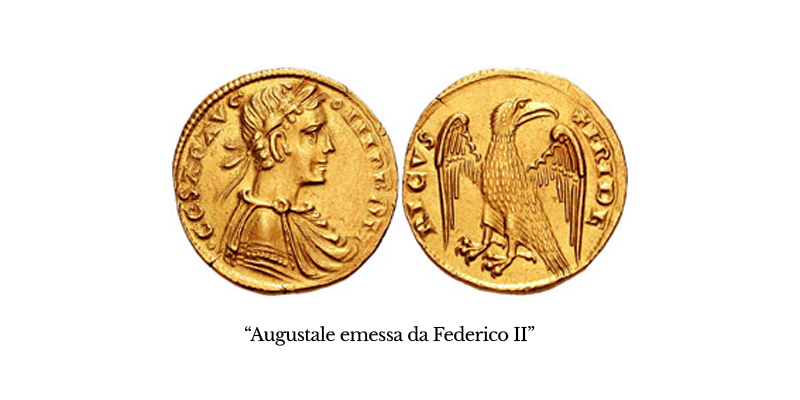
At the same time, the image of the eagle also acquired an important cultural meaning, becoming the symbol of an age of renewal and splendour. Frederick II used the emblem systematically in his imperial propaganda; the eagle appeared everywhere, on coins, seals and official documents, as a constant reminder of the Emperor’s power and legitimacy.
In this sense, the Augustalis, a coin minted by Frederick II on which the eagle is prominently depicted, is an excellent example of the omnipresence of this symbol.
The Ghibellines, supporters of the Hohenstaufen, also adopted the black eagle. This, in turn, led their opponents, the Guelphs, to choose the other “king of beasts” as their emblem: the lion.